
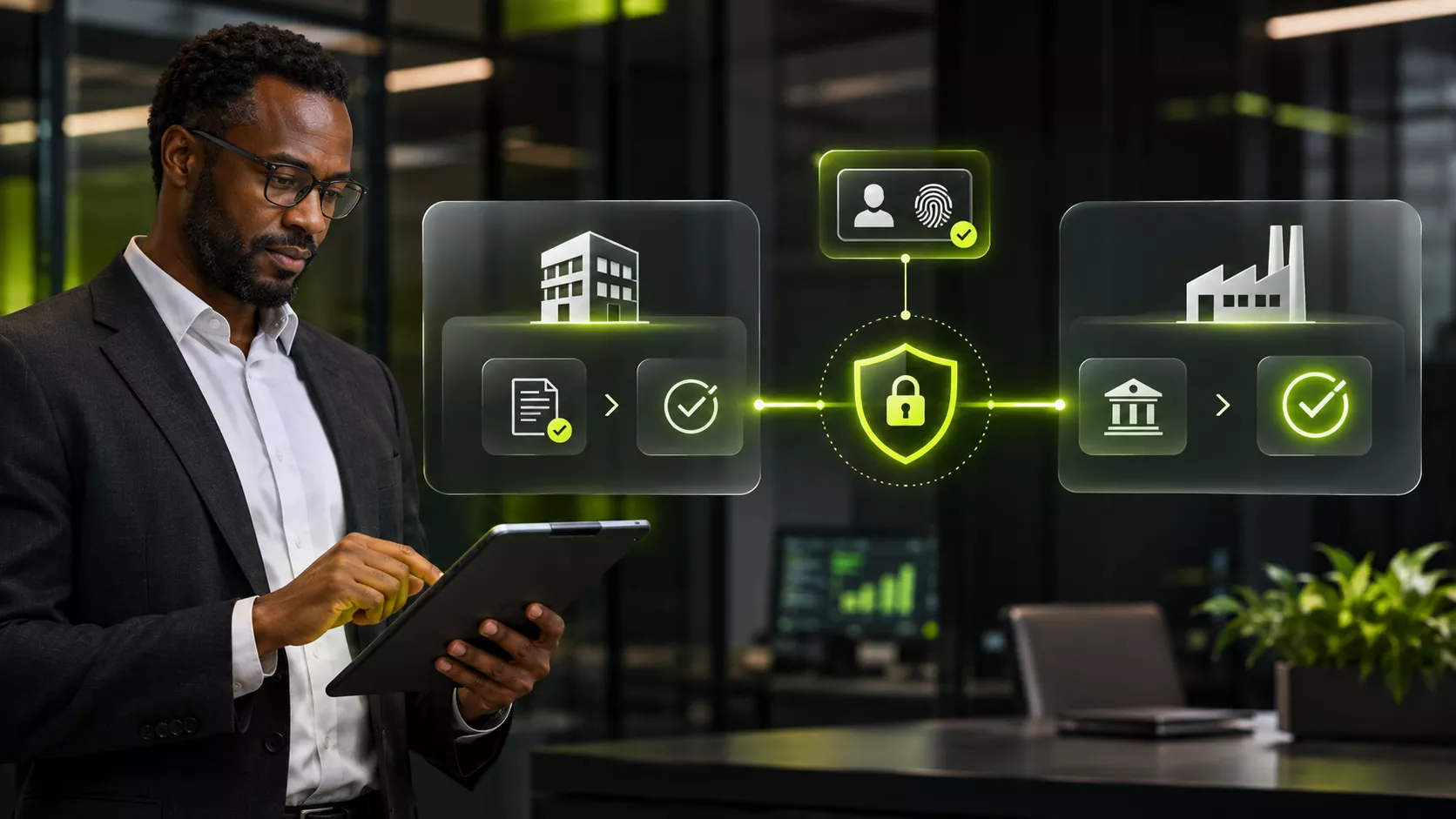
AI agents for payments can now complete previously approved B2B invoices, but they do not independently decide what to pay. A live pilot from Visa, BILL, and Billtrust shows how an authorized agent can execute the final payment step with verifiable identity, tokenized credentials, buyer-defined rules, and visibility.
Announced on October 20, 2026, the pilot brings agentic commerce into a concrete business workflow: accounts payable.
From recommending a purchase to executing a transaction
Much of the discussion around AI agents in commerce has focused on product recommendations, comparisons, and checkout support. This pilot extends the scope: a registered agent can enter a supplier portal and complete a payment that has already been authorized.
The distinction matters. The agent does not approve the invoice or decide to spend. It executes an eligible instruction under buyer-defined controls.
The manual gap the pilot is designed to close
Many accounts-payable processes are partially automated. An invoice may be approved internally, yet the last stage still requires a person to:
- open the supplier portal;
- authenticate;
- copy invoice information;
- choose the payment method;
- confirm the transaction;
- record the outcome for reconciliation.
The pilot targets that manual gap between buyer approval and supplier acceptance.
How an authorized agent completes the payment
- The buyer approves the invoice and payment instruction.
- BILL's agent, registered through Visa Trusted Agent Protocol and Agentic Directory, acts for the buyer.
- The agent uses tokenized payment credentials and controls tied to the approved instruction.
- Billtrust recognizes and authenticates the agent in the supplier portal.
- The payment is completed with visibility for authorization, tracking, and reconciliation.
Visa states that the design avoids sharing supplier-portal credentials and preserves supplier acceptance policies.
What changes for companies
The shift is not simply about adding AI to finance. It is about enabling a non-human identity to act across platforms under verifiable authorization.
That requires operational answers: which agent is authorized, for which invoice, up to what amount, for how long, what happens when data does not match, and who approves an exception?
Agentic commerce is not unlimited autonomy
A payment is a useful model for enterprise agent design: specific purpose, recognizable identity, narrow permission, secure credentials, limits, and records.
Automation does not remove control. It moves control from manual data entry into verifiable policies.
How this connects with Ainoa
Ainoa builds custom administrators and custom intelligent agents that connect systems and execute processes under business rules.
In ecommerce, an agent may support customers, check inventory, and prepare a payment, as explained in AI for ecommerce: support, inventory and payments in one conversation. A B2B workflow applies the same principle with stricter approvals, traceability, and separation of duties.
MCP, A2A, UCP, AP2, and emerging agent-identity mechanisms point toward the same requirement: intelligent systems must collaborate without losing context, authorization, or control.
Checklist before automating payments
- Separate approval from execution.
- Assign a unique identity to the agent.
- Limit amount, supplier, invoice, and validity period.
- Use tokenized credentials instead of shared passwords.
- Record requests, approvals, and outcomes.
- Define exceptions and human escalation.
- Reconcile automatically with the financial system.
Frequently asked questions
Does the agent decide which invoices to pay?
No, not in the announced pilot. It only executes eligible payments previously approved by the buyer.
Does it need the supplier portal password?
The announced design uses agent recognition and tokenized credentials to avoid sharing portal access.
What is an agentic B2B payment?
It is a business transaction executed by an authorized agent for an organization under verifiable instructions, identity, and controls.
The value is closing the process without losing control
The opportunity is not to replace human approval with an opaque decision. It is to remove the last repetitive step after valid approval while preserving evidence of who authorized the action, what the agent executed, and what happened.
If your company needs to connect approvals, supplier portals, inventory, and administrative systems, Ainoa can help design a custom automation with clear limits.