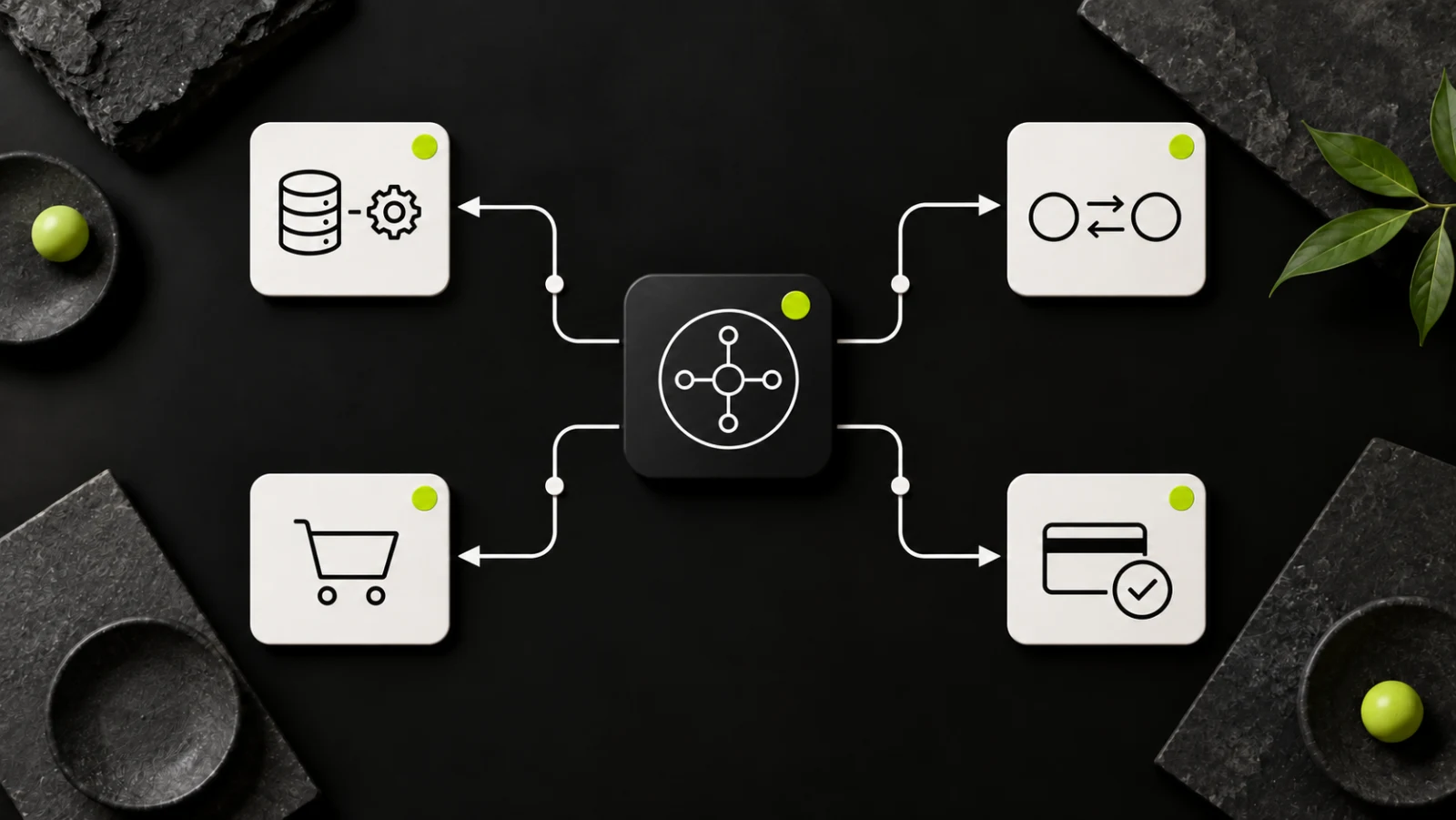
A person asks an assistant to find a product, reserve it and pay. To complete the request, several systems must understand one another without sharing more information than necessary.
A new layer of agent protocols sits behind that simple experience.
Protocols for AI agents are standards that define how agents discover tools, exchange context, coordinate tasks and request actions such as purchases or payments.
Why so many protocols are appearing
No single agent controls every calendar, catalog, payment system and business application. It needs predictable ways to connect with them.
Each protocol solves a different part of the journey. They are not equivalent products, and a company does not need to implement every acronym at once.
MCP: connecting models to tools and data
Model Context Protocol provides a standardized way to expose resources and actions to an agent. It can allow the agent to read information or use tools under defined permissions.
For more context, read what MCP is and how it connects AI to your business.
A2A: coordinating agents
Agent2Agent focuses on different agents discovering capabilities and collaborating. The company still decides which information is shared and which agent remains responsible.
UCP and ACP: connecting commerce and agents
Universal Commerce Protocol and Agentic Commerce Protocol structure parts of product discovery, catalog, cart, order and purchase. The merchant keeps inventory, payment and fulfillment systems as the source of truth.
AP2: authorizing agent-led payments
Agent payment protocols add authorization and limits. Their purpose is not uncontrolled purchasing, but expressing who authorizes, how much and under which conditions.
A complete journey
Composite example: this is not an implementation attributed to a specific Ainoa customer.
An agent receives the goal of organizing a trip. It uses tools to check policies, collaborates with specialized services, searches options and prepares a purchase. Before paying, it requests confirmation under a defined limit.
The experience looks like a conversation; underneath it are identities, permissions, records and source systems.
How to decide what your company needs
- Start with the process, not the acronym.
- Identify systems, data and actions.
- Define who initiates and who approves.
- Select standards compatible with the platforms involved.
- Test errors, retries and revocation.
- Record every relevant action.
Frequently asked questions
Do MCP and A2A compete?
Not necessarily. MCP connects agents to tools; A2A focuses on coordination between agents.
Do UCP and ACP replace ecommerce?
No. They structure agent interactions while the merchant retains catalog, orders, payments and fulfillment.
Does every company need these protocols?
No. The decision depends on the process and channels where the company wants to operate.
The acronyms matter less than the operation
Value appears when systems exchange the right information under clear permissions and produce a verifiable result.
Ainoa designs Custom Intelligent Agents and integrations adapted to existing systems.
Talk to Ainoa. We translate your process into an understandable architecture and select only the connections it truly needs.